

"Such a war is already underway here." Polish general speaks of hidden activities

- - Considering that today a conflict does not have to be carried out through the use of armed forces, I will say provocatively that such a war is already underway in our country - says General Mirosław Różański.
- - Espionage, sabotage, and the spread of fake news are intended to arouse fear and a sense of threat in societies, weakening the unity of allies - he claims.
- Gen. Mirosław Różański is demanding, among other things, an audit of major arms contracts concluded under Minister Mariusz Błaszczak. "He established a world championship by purchasing tanks, launchers, self-propelled howitzers, and aircraft in six months. All from South Korea. This is a huge misunderstanding," he claims.
Mark Rutte, NATO Secretary General, warned that the West is not ready for what might come in four to five years, while NATO Commander in Europe, General Alexus Grynkewich, stated that such a conflict with Russia could break out as early as 2027. Prime Minister Donald Tusk, in turn, said that intelligence data indicates Russia is preparing for war, and General Wiesław Kukuła, Chief of the General Staff of the Polish Army, argued that everything indicates that we are the generation that will take up arms to defend our country. Fear not. Is war really just on our doorstep?
"I think it would be best if we began our conversation by defining the concept of war, so that both we and the reader of this article understand it in the same way. Then we'll be more comfortable discussing it. If we're talking about typical war, a full-scale armed conflict, then this is a space we need to consider, even if a conflict on that scale doesn't currently threaten us."
We should also be aware that there are also subliminal wars, hybrid wars. However, there is a certain cacophony in the use of these terms; they are generally used interchangeably. If we consider that today, conflict between states does not necessarily have to be conducted through the use of armed forces, whose goals were once based on seizing control of another state's territory, and that today, seizing dominance over another state can proceed in a completely different manner, then I would say, provocatively, that such a war is already underway here.
However, it is still a war on the verge of armed conflict.
Covert espionage, sabotage, arson, and airspace violations are underway. These activities extend beyond Poland, such as shipments containing explosives sent to European countries. The effects of psychological warfare, conducted using disinformation and propaganda methods, the spread of false news, and the stirring up of Polish fears and historical events, are also felt daily.
We hear about disrupting GPS signals in airplanes and ships, hacking into the accounts of banks and institutions, sabotaging critical infrastructure, manipulating financial markets, and taking control of military and communication systems.
And recently, drone attacks. What's the point of these actions? They're talking about testing our anti-aircraft defenses, potentially preparing for a possible future conflict.
All of these actions are currently being conducted primarily to instill fear and a sense of threat in societies, and to weaken the unity of allies. Recently, we have seen an increasing escalation of Russian actions aimed at weakening Western democracy, fostering distrust of allies, and inciting anti-Ukrainian sentiment.
And it seems to be working. A report prepared by EuroVerify a few days after the drone attack on Polish airspace showed that 27% of internet users in Poland, despite a lack of evidence, believed the narrative that Ukrainians were responsible for the incident.
"That's why it's so important not to succumb to such emotions. The enemy is in the East, and cutting Poland and our allies off from Ukraine would make it much easier for the Russians to wage war."
Russia has already been identified as a threat to our region at two NATO summits in Madrid and The Hague, and the initiation of a brutal war with Ukraine in 2022 confirms this. When we see what is happening in our country in connection with Russian aggression, hear reports of Russian agents operating in Poland, arrests of arsonists and agents attacking or preparing attacks on railway networks, it is clear that all of this is connected to Russia's imperial policy.
I think that if we were to sort out the conceptual elements indicating where there is still a crisis situation and where a war is already starting, then the forecasts presented by the chairman of the North Atlantic Alliance, the commander of American forces in Europe and our politicians are not without foundation.
After years of peace and prosperity, we believed in eternal peaceMaybe this scare tactic is about mobilizing societies.
You cited a statement by General Kukuła, Chief of the General Staff, which I consider inappropriate and disastrous, as are most of his statements. The first soldier of the Republic of Poland cannot stir up emotions, conveying the narrative that we have no choice – there will be a military war and we will have to take up arms to defend our homeland. The military spends enormous amounts of money on modern weapons and training precisely to prevent such a war. It was a highly unfortunate statement.
To counterbalance this, I will say that shortly after this speech, I was at the Military Academy and met with military students in their final year, future graduates, and I decided that it would be more appropriate to motivate them to military service if I shared my own examples from the time when I started my military service as a second lieutenant.
We also discussed how these future second lieutenants interpret the words of the military regiment. When we recall the regiment's other phrases, we find some that also refer to the idea that, in a given situation, a soldier spares neither his own blood nor his life in defense of the Republic. I believe that one must weigh one's words when discussing security issues. I dedicate this statement to all politicians and military personnel responsible for the country's security.
The military, like the state, must prepare for the worst-case scenario. Do we really know what kind of war we're preparing for? We buy tanks and guns, but our air defenses are still full of holes. We talk about an army of 300,000 or 500,000 men, yet we still don't have a National Security Strategy.
- You touched on several issues with this question. I believe the claim that we don't have a strategy is incorrect. We do have such a strategy, the National Security Strategy, which was developed in 2020.
However, it does not take into account new threats that we did not know about 5 years ago.
"Let me remind you that this year the government prepared a draft of a new National Security Strategy, but the president has not yet implemented it. Therefore, the provisions of the 2020 document are still in force. And indeed, I must agree that this strategy is highly inadequate to the current security environment, and in this respect, saying that we have a strategy that does not meet the current challenges in the security environment is fully justified."
Personally, I am concerned about such great inertia when it comes to the issue of whether the president would formally implement the strategy prepared by the government, so that we can say that we currently have a state policy framework that not only sets the direction of development but also gives it institutional durability and operational effectiveness.
The President's Office is not optimistic on this matter.
"Regarding our purchase of tanks and attack helicopters, let me mention two things in this context. Since 2020, when I've been asked about the development of our armed forces, I've always presented it in terms of capabilities. I don't believe—and I'm still convinced that this is a mistake—that we need to build a 300,000-strong army, because in reality, this is Chairman Kaczyński's idea, which was conceived solely because it sounds rounded and sells well."
Later, then-Minister of National Defense Mariusz Błaszczak strove at all costs to reach this 300,000-man mark, which, considering demographics and the current level of commitment and willingness to serve in the military among young people, I consider unattainable. That's why, starting in 2020, I've been saying we should have armed forces capable of identifying and neutralizing threats both within and beyond our borders.
If we truly want to implement the provisions of Article 26 of the Constitution, we must have armed forces capable of detecting and eliminating threats—not only within our territory but also beyond its borders. Only then can we say we have a modern military that operates in accordance with the mission assigned by the state. This definition of defense capabilities can then be tailored to specific tools and technologies that will enable us to achieve what has been discussed for years—real readiness to operate in a dynamic and unpredictable security environment.
No country in Europe is able to effectively secure its airspace on its own in the event of a massive airstrike.Even military officials admit that it will be difficult to reform the army quickly at this time. Bureaucracy within the military remains entrenched, and documents and plans are piling up in command.
"Regarding planning issues, the decision-makers in the Law and Justice era were heavily influenced by politics. Decisions were made executively by politicians, specifically Mariusz Błaszczak, who even boasted about it, having established a world championship by purchasing tanks, launchers, self-propelled howitzers, and aircraft within six months. All from South Korea."
This is a huge misunderstanding – there's no way to meaningfully select and execute military equipment and purchases within six months. It turned out that the tanks arrived without training or maintenance, and the aircraft without ammunition. This isn't modernization, it's improvisation. I proposed, and it was 2022, that an audit of all procurement procedures conducted under Minister Błaszczak should be conducted.
At the time, I faced harsh criticism – I was called an agent and accused of acting against Poland's security. Today, with the benefit of hindsight and the facts, I maintain my position: such an audit, conducted on a large scale and in a comprehensive manner, should have taken place.
Speaking about new capabilities in relation to the purchase of large amounts of equipment dedicated to the land forces when we do not have air defense, I would like to remind you that the most important air defense programs today, such as Wisła, Narew and Pilica, were actually established before 2015 and are currently being expanded.
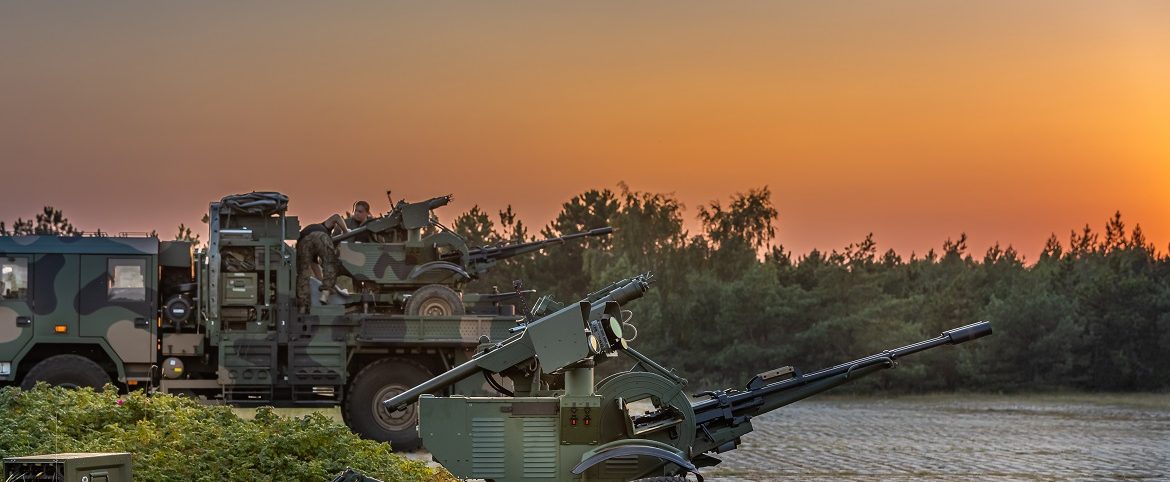
However, it's important to realize that virtually no country in Europe can effectively secure its airspace on its own in the event of such massive attacks as those in Israel, or even those taking place in Ukraine, where Russians often use several hundred unmanned aerial vehicles and missile systems in their attacks. I believe we should recognize that our security, in addition to the potential of our armed forces, also rests on two important pillars: participation in the North Atlantic Alliance and the European Union.
Is this second pillar still being significantly weakened by the opposition? The current government's declaration of joining the European anti-missile shield, initiated by Germany, has sparked strong opposition within the ranks of the Law and Justice party (PiS) and some of its supporters.
"Personally, I would like to return to consideration of the project presented by Prime Minister Tusk, concerning the construction of a European Air Defense Shield. I would like to say to all participants in the discussion on this topic that air defense is not just about Patriot systems, but also about the air force, especially fighter aircraft, which can actively participate in combating air attack aircraft. It is also an effective reconnaissance system that will identify threats even beyond our country's borders."
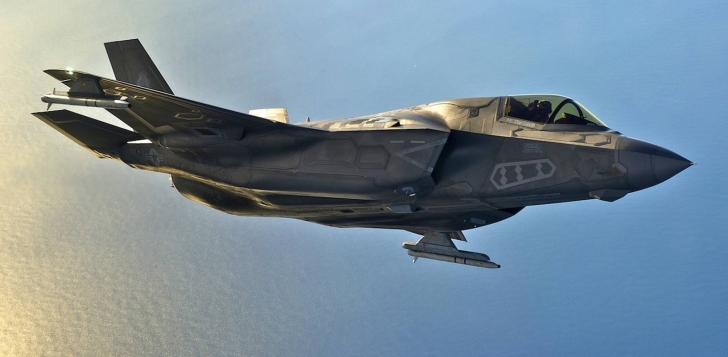
It is not only about missile systems that can effectively combat air attack assets, such as ballistic missiles, or meet the new threats in airspace - unmanned aerial vehicles, i.e. drones, which can be combated not necessarily with extremely expensive missile systems, but also with anti-drone systems, which currently constitute an important element of air defense.
It must be said clearly that we are only at the stage of building this potential, but we must think about it and even be the initiator of such initiatives so that the building of this potential takes place not only and exclusively on a Polish scale, but also on a regional, i.e. European scale.
We are building a modern, strong army with great deterrence potentialNow we are building an army to meet new challenges, buying what is a priority and what the army needs most, but do we know how to properly connect all these pieces to make good use of this potential?
"This question also contains an answer. I agree that decisions should be comprehensive, forward-looking, and coordinated. On the other hand, you should be aware that I am not only an expert, but also a member of parliament, the chairman of the Senate National Defense Committee, so I won't be able to answer this question precisely based on my current knowledge."
Most importantly, we are building a modern, strong army with significant deterrence potential. I believe it will be an army capable of identifying threats before they reach the country's borders and neutralizing them even beyond its borders, during the planning and concentration phases. An army that not only defends but also shapes the security environment, deters aggressors, strengthens Poland's position in the region as a reliable partner in NATO structures, with the capacity to participate in allied missions and the ability to quickly respond to crises in the neighborhood.
I'm asking this because General Tomasz Drewniak recently said, among others, for the weekly "Polityka," that the military's biggest problem is the lack of a coherent, long-term plan for the development of the armed forces, operations based on ad hoc decisions, the departure of a significant portion of experienced personnel from service, and the pattern, perpetuated over the years, that the military doesn't say everything and is supposed to keep quiet and not speak.
"I regret to say that General Drewniak's statement is unfortunately justified. In my opinion, the situation remains such that politicians treat soldiers not as subjects, but as objects. The problem is that the military unfortunately allows this to happen. At the beginning of 2017, I left the army because I disagreed with my political superiors regarding the directions they were setting for us. I'm referring here to Mr. Macierewicz and President Duda. I made it clear that I disagreed with what they were proposing, and at the same time, they prevented me from fulfilling the mission I declared, namely to prepare the armed forces for wars that may come, not those that have occurred."
So, there are two aspects here. First, the political one, where I believe that, unfortunately, under the banner of civilian control of the military, leadership positions are still entrusted to politicians who are not always prepared to serve as those responsible for our security. On the other hand, I'm concerned about a certain lack of assertiveness on the part of those wearing uniforms towards politicians.
Some generals, while still serving, claim that after eight years of PiS rule, we've acquired an army of staffs, boards, inspectorates, and other administrative units. Furthermore, it's often said that some commanders are left with broken moral fibers and lack the knowledge and skills to lead the military in a new direction. The response is that they've retired and don't know the military. Are they really wrong?
"Politicians have done a lot of harm in the army. Politicians alone are responsible for all of this. Antoni Macierewicz, when he was Minister of National Defense, boasted that he had dismissed nearly 300 senior officers, officers with the rank of general, colonel, and even lieutenant colonel, and in return began selecting and promoting officers to subsequent positions without sufficient preparation for the work in those positions."
Let me remind you that it was Macierewicz who introduced the decision to allow promotion two ranks higher, without any formal education, solely based on the needs of the armed forces. Politicians selected individuals in the military who absolutely uncritically implemented their political will. For example, the Chief of the General Staff, who was a colonel in 2016 and became a four-star general in 2023 – a global phenomenon, unheard of in any army. In only three positions, including one during the formation of the Territorial Defense Forces component, did he earn three general's stars consecutively. These were political decisions from beginning to end. Over time, the generals who aligned themselves with this policy, to some extent, deepened the competence crisis.
It must also be said bluntly that this has had an absolutely disastrous impact on the remaining personnel corps. Young lieutenants, captains, and officers with the rank of major, observing how they could be promoted—to put it colloquially—without completing the full three-year term of service in their positions, began to wonder whether it was worth the sacrifice and dedication to service when they could advance more quickly and effortlessly in other ways.
The status of non-commissioned officers in the army has been depreciatedThe same thing happened in the military when the decision was made to dress military personnel in uniforms – for additional pay – to bolster the armed forces. These three aspects have a disastrous impact on the military's performance. Of course, I believe that civilian employees are absolutely essential and needed in the armed forces, but the decision to dress kitchen assistants, administrative staff, and military service personnel in uniforms is incomprehensible to me.
At that time, a soldier who had been on several missions and was waiting for a course to become a non-commissioned officer (NCO) couldn't get into one. He saw that civilians who had just put on uniform, in order to receive training commensurate with NCO positions, were rushed en masse to NCO training in military units. I believe that this action devalued the status of NCOs.
The third factor that negatively impacts morale is the blurring of the line between the ethos of service and ordinary work. If a soldier—for whom the uniform should symbolize dedication and readiness for action at any moment—sees a uniformed person, formerly a civilian employee, operating according to a bureaucratic rhythm from 7:30 a.m. to 3:30 p.m., they begin to wonder whether they should expect similar conditions. This raises questions about the meaning of service and its unique nature.
Unfortunately, in military units it is currently clear that military service is treated as a job, a way to earn money, rather than as a way to pursue one's life mission and passion.
Perhaps a good solution would be to introduce compulsory military service, as in Germany and other NATO countries? For example, we would have more trained reservists.
"Currently, a good tool for this is the voluntary compulsory military service formula. I consider it a good solution, but with a caveat. It concerns the criteria for admission to this service and the training process, which I consider inadequate to our needs. Anyone who applies is accepted, without any criteria for education, fitness, or psychophysical attributes."
These disastrous regulations introduced by the Law and Justice party (PiS) should be interpreted as a desire to rapidly increase the number of soldiers. However, given the growing threats and the military's future needs, I believe we are at a stage where we can consider suspending compulsory military service. Modified in form, duration, and scope of training.
However, I don't think it would be the best solution, if we were to decide to do so, to introduce such simplifications in this service as the one introduced by the current Chief of the General Staff of the Polish Army in the Territorial Defense Forces, where after 16 days of training, a soldier takes a military oath and receives a weapon. There, after a few weeks of training, one can become an instructor non-commissioned officer. I absolutely wouldn't recommend such simplifications.

wnp.pl


